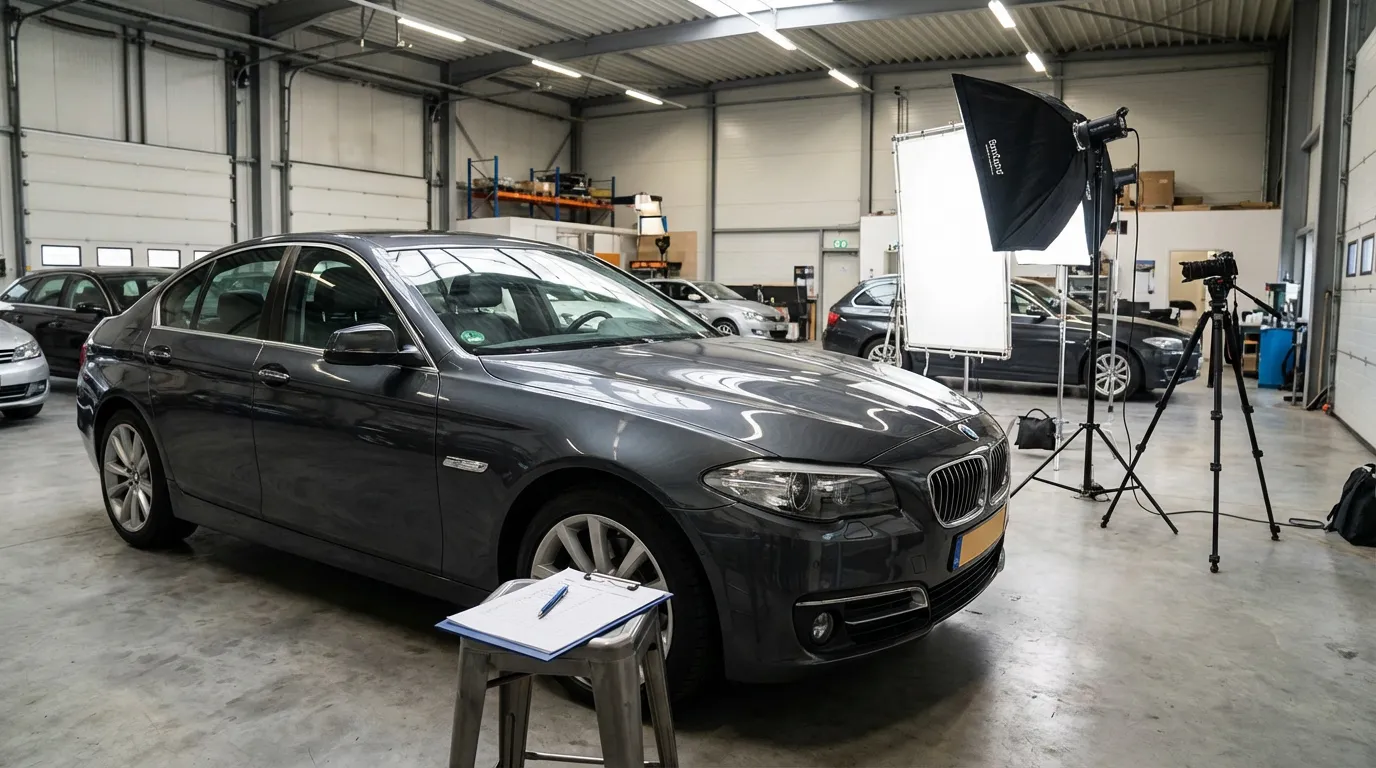
Why Auction Preparation Directly Impacts Sale Price
NAAA data shows approximately 39% of offered vehicles fail to sell at wholesale auction, with the 2024 industry conversion rate at 61.3%. The difference between a first-run sale and a no sale often comes down to preparation — not price. Vehicles listed with incomplete descriptions, poor photography, or missing documentation attract fewer bidders and lower hammer prices.
This auction readiness checklist covers 29 items across five categories: vehicle preparation, documentation, photography, pricing, and platform setup. Each checkbox saves to your browser, so you can work through the list over multiple sessions. The page is print-friendly for use in the shop or staging area. Whether you are a dealer remarketing trade-ins, a fleet manager running a defleet cycle, or a remarketing professional handling volume disposals, these five phases apply to every vehicle entering the wholesale channel.
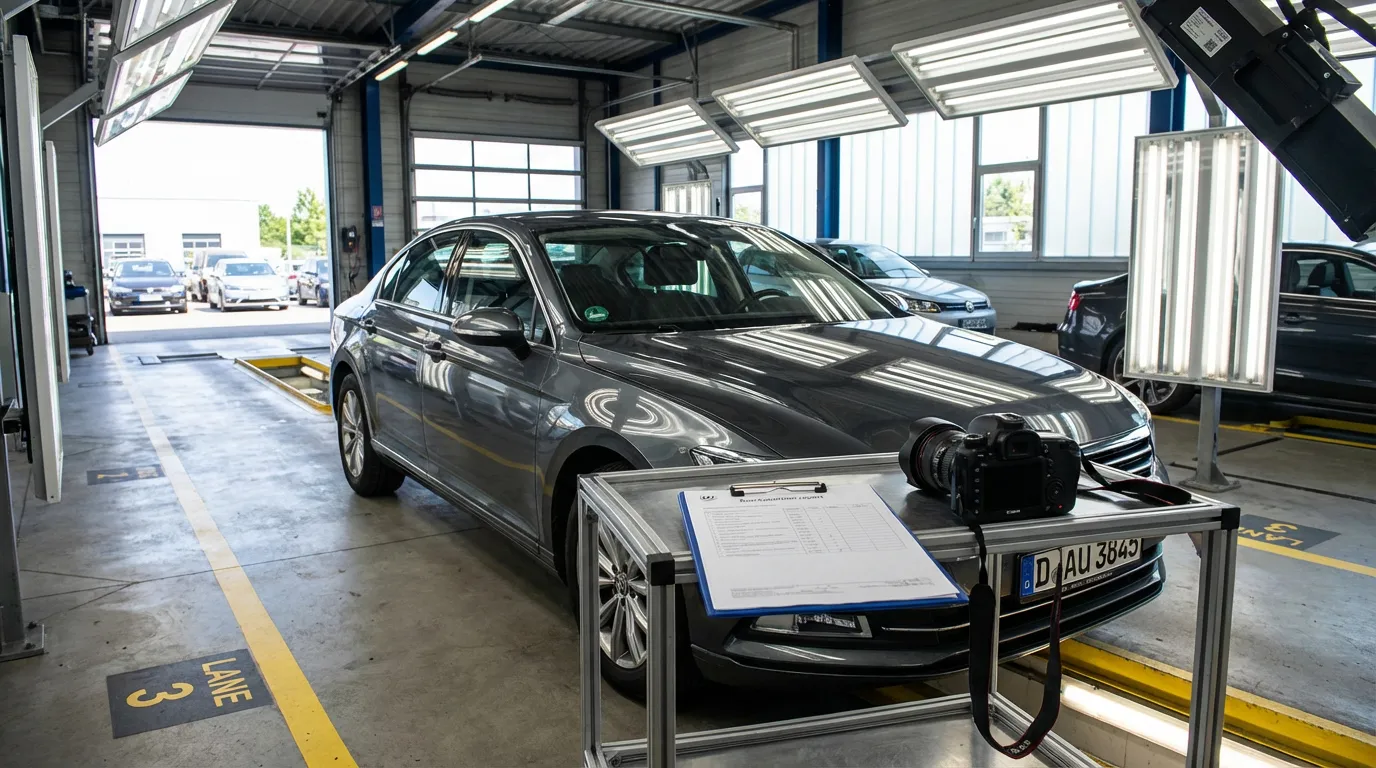 Systematic preparation across five phases drives higher conversion rates and stronger hammer prices.
The ROI of Auction Preparation
Every dollar invested in pre-auction preparation returns measurable gains in conversion rate, buyer reach, and final sale price. The following table quantifies the impact across four preparation factors using industry data from Manheim, ACV Auctions, and the NAAA.
| Preparation Factor | Without Preparation | With Preparation | Impact |
|---|---|---|---|
| Conversion rate | ~50% first-run sell-through | 70–80% first-run sell-through | +20–30 percentage points |
| Buyer reach | 35-mile radius (in-lane only) | 95+ miles (simulcast/digital) | 2.7x wider buyer pool |
| Arbitration rate | 8–12% of transactions disputed | Under 3% of transactions disputed | 60–75% reduction in post-sale disputes |
| Simulcast sell-through | 40–50% of online bids convert | 65–75% of online bids convert | +25 percentage points for documented vehicles |
Vehicle Preparation
Clean, presentable vehicles attract more bids and higher final prices. The goal is not retail-level detailing — it is removing distractions that cause buyers to discount their bids or skip the listing entirely. Focus on cleanliness, visibility of actual condition, and elimination of anything that signals neglect.
Vehicle Preparation Checklist
0 of 8 completedDocumentation
Complete documentation removes friction from the sale process. Missing paperwork delays title transfer, triggers buyer complaints, and increases the risk of arbitration claims. Assemble all documents before photographing the vehicle so you can include documentation shots in the listing.
Documentation Checklist
0 of 6 completedPhotography and Condition Reporting
Photography is the condition report. For timed auctions and simulcast events, buyers who cannot inspect the vehicle in person rely entirely on photos and written descriptions. Listings with 20+ photos sell at higher rates and attract bids from buyers outside the local market — expanding the competitive pool from a 35-mile radius to 95+ miles.
Photography and Condition Reporting Checklist
0 of 6 completedThe 15 minimum required photo angles for a complete listing:
- Front straight-on
- Front three-quarter (driver side)
- Front three-quarter (passenger side)
- Driver side profile
- Passenger side profile
- Rear straight-on
- Rear three-quarter (driver side)
- Rear three-quarter (passenger side)
- Roof (for hail or dent documentation)
- Dashboard and centre console
- Front seats
- Rear seats
- Cargo area / boot
- Engine bay
- VIN plate and odometer
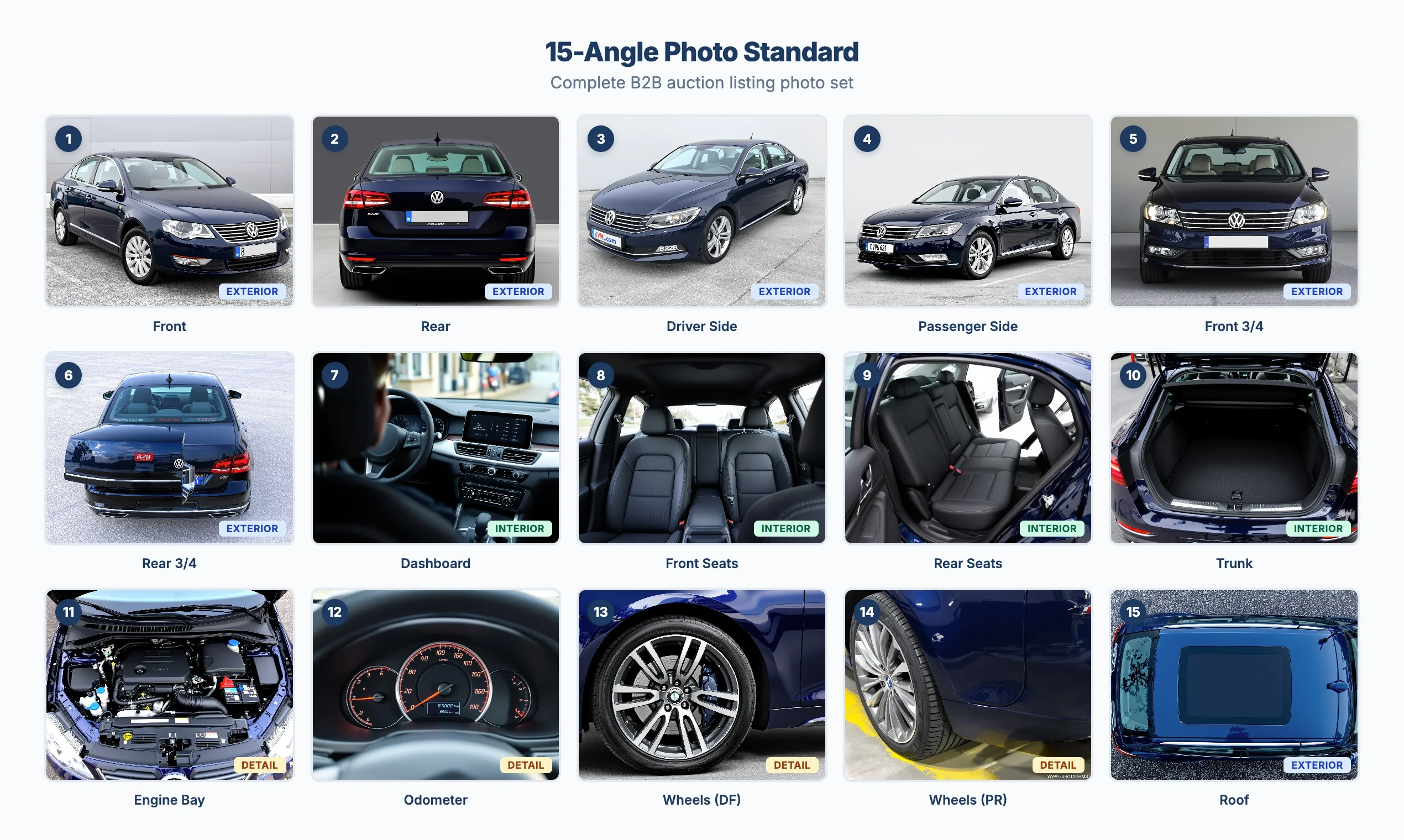 A minimum of 15 angles gives remote buyers the confidence to bid competitively.
Pricing and Reserve Strategy
Reserve price strategy directly determines whether a vehicle sells on the first run or cycles back as a no sale. Reserves set too high suppress bidding activity. Reserves set too low risk leaving recovery value on the table. The target is a reserve that attracts competitive bidding while protecting your floor price.
Research current wholesale market values using multiple sources before setting a reserve. Factor in all disposal costs — seller fees, reconditioning, transport, and holding costs — to determine your true net proceeds at any given hammer price. A vehicle that sells at $12,000 with $1,200 in total disposal costs nets $10,800. If holding costs add $50 per day and the vehicle takes 14 extra days to sell after a failed first run, the net drops to $10,100.
Pricing and Reserve Strategy Checklist
0 of 4 completedPlatform Setup and Listing
A complete, accurate listing is the final step before the vehicle goes to market. Incomplete listings — missing fields, low photo counts, vague descriptions — reduce buyer confidence and suppress bids. Treat the listing as a data package that must answer every question a remote buyer would ask during an in-person inspection.
Platform Setup and Listing Checklist
0 of 5 completedFor guidance on selecting the right auction format, see the Auction Types Guide. The Platform Selection Guide compares platform capabilities across regions to help match each vehicle to the channel where it draws the strongest buyer demand.
Putting It All Together: The 5-Phase Workflow
The 29 checklist items above follow a sequential five-phase workflow. Each phase builds on the previous one. Skipping phases — particularly vehicle preparation and documentation — is where conversion rates drop and recovery values decline.
Vehicle Preparation
Wash, clean, inspect, and present the vehicle in a condition that allows buyers to assess true quality without distractions. Budget ~$200 and two to three hours per vehicle for basic reconditioning.
Documentation Assembly
Gather title, service records, vehicle history report, keys, lien release, and inspection certificates. Missing documents delay sales and reduce buyer confidence.
Photography and Condition Reporting
Capture 15+ standard angles, document all damage, and record VIN and odometer. Complete condition reports expand buyer reach from 35 miles to 95+ miles.
Pricing and Reserve Setting
Research market value, calculate floor price after all disposal costs, and set a reserve within 5–10% of wholesale market value. Factor holding costs into every pricing decision.
Platform Setup and Listing
Verify account status, select auction format, complete all listing fields, upload photos and condition report, and schedule for optimal buyer engagement (Tuesday–Thursday).
Quick Reference: Pre-Auction Day Checklist
Print this condensed reference and keep it in the staging area. It covers all five phases in a single-page format.
Frequently Asked Questions
How long does it take to prepare a vehicle for auction?
Basic preparation takes two to three hours per vehicle for a single operator. This includes exterior wash, interior cleaning, light inspection, documentation assembly, and a 15-angle photo set. Fleet operations running volume can reduce this to 60–90 minutes per vehicle with a dedicated staging team and standardized workflows. The time investment pays for itself through higher first-run conversion rates and reduced relisting cycles.
Is reconditioning worth it for wholesale auction vehicles?
Yes, but within limits. Basic reconditioning ($200 per vehicle) returns $2–$3 for every dollar spent — cleaning, odour treatment, and bulb replacement fall into this category. Comprehensive reconditioning ($1,000 per vehicle) is justified only for higher-residual units where the incremental recovery exceeds the cost. Do not invest in paintwork, bodywork, or mechanical repairs unless the expected return is at least double the expense.
What happens if my vehicle does not sell at auction?
A no sale triggers relisting fees on most platforms and adds holding costs of $40–$85 per day. The standard approach is to reduce the reserve by 5–10% and relist within seven days. Extended holding periods erode net recovery faster than a modest reserve reduction. If a vehicle fails to sell after two runs, evaluate whether the reserve is aligned with current market data or whether the listing quality (photos, description, condition report) needs improvement.
How many photos should I include in my auction listing?
A minimum of 15 angles covers the standard exterior and interior views that buyers expect. Listings with 20+ photos — including damage close-ups, tyre tread measurements, and engine bay shots — sell at higher rates and reach buyers beyond the local market. Condition reports with comprehensive photography expand buyer reach from a 35-mile radius to 95+ miles, increasing bid competition and final sale price.
Next Steps
This checklist provides the preparation framework. Apply it to every vehicle entering the wholesale channel — whether you are listing one unit or staging 500. Consistent preparation across all five phases compounds into measurably higher conversion rates and stronger recovery values over time.
For deeper guidance on specific aspects of the auction process, explore these related resources:
- Auction Types Guide — compare timed, live, simulcast, and sealed-bid formats
- Platform Selection Guide — match vehicles to the right platform and buyer network
- The Vehicle Dealer’s B2B Auction Playbook — full sourcing workflow with KPI benchmarks for dealers
- The Fleet Manager’s B2B Auction Playbook — disposal workflow with seasonality data for fleet operations
- The Remarketing Professional’s B2B Auction Playbook — multi-channel strategy for high-volume remarketing teams