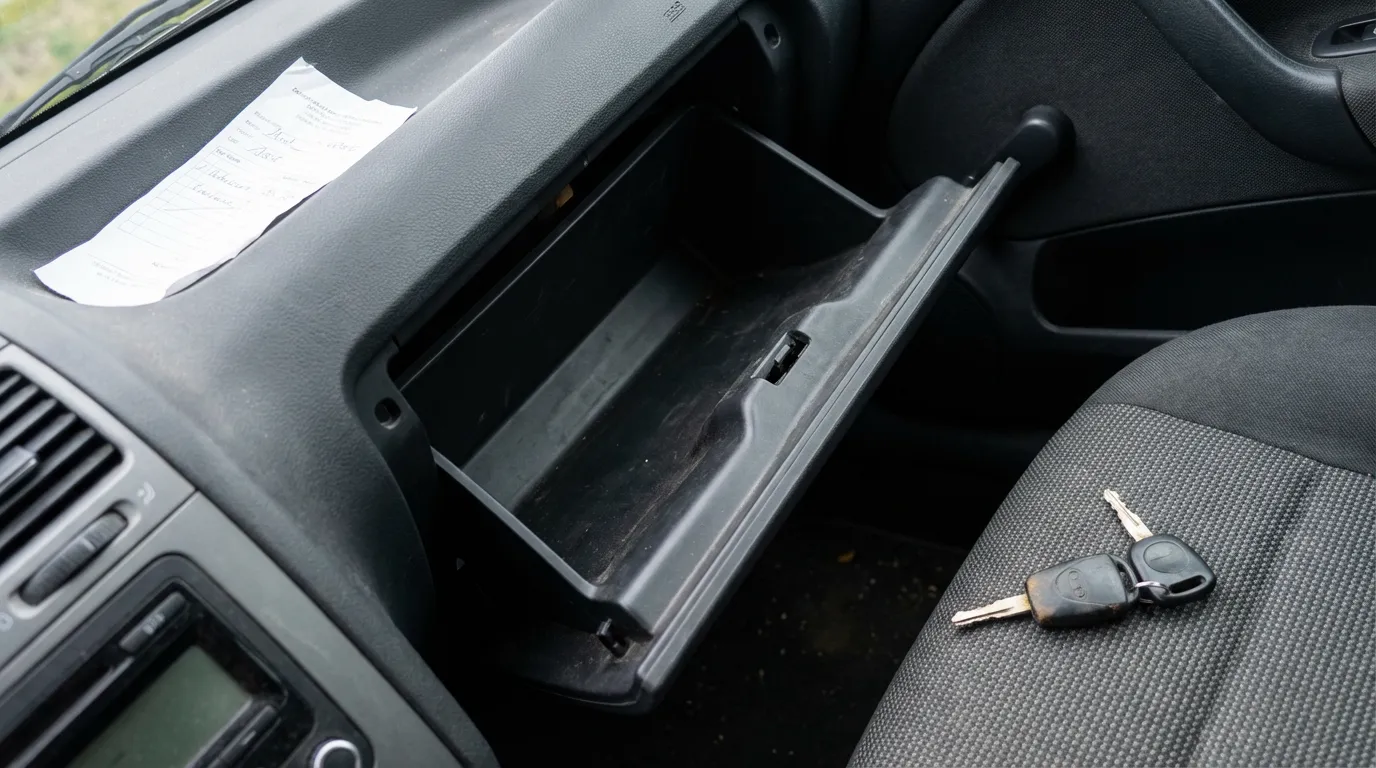
Why Missing Items Claims Are Worth Filing
Approximately 40% of wholesale auction vehicles arrive missing at least one key. A smart key replacement runs $250–$600, an EV charging cable costs $200–$700, and even a locking wheel nut key can reach $100. These costs erode margins on vehicles where the condition report indicated the items were present — or where the items are reasonably expected for the vehicle’s age and trim level.
Many dealers skip missing-item claims because they assume the cost falls below the arbitration threshold. Filing is worth it even for individual items. Most platforms handle missing-item claims through operations or customer service channels that operate independently of the formal arbitration process.
Missing Items Claim Email Template
This template separates items documented in the condition report from items reasonably expected based on the vehicle’s age and equipment level. The subject line includes the lot number for traceability. The evidence list references attached photos, and the resolution request specifies a dollar amount backed by replacement cost sources.
Commonly Missing Items and Replacement Costs
Replacement costs vary by manufacturer, model year, and whether you source OEM or aftermarket parts. The estimates below reflect OEM pricing for vehicles under eight model years old. Use these figures as a starting point and attach a dealer or supplier quote for your specific vehicle when filing.
| Item | Estimated Cost | Notes |
|---|---|---|
| Standard key fob | $50–$150 | Remote only, no immobilizer programming |
| Smart key / proximity key | $250–$600 | Includes programming; luxury brands at higher end |
| Owner’s manual | $35–$100 | OEM replacement; digital versions sometimes free |
| Locking wheel nut key | $20–$100 | Often requires full lock set replacement if unavailable |
| Parcel shelf / cargo cover | $150–$400+ | OEM only; rarely available aftermarket |
| Floor mats (OEM) | $50–$150 | Branded, fitted mats; aftermarket significantly cheaper |
| EV charging cable (Level 1/2) | $200–$700 | Tesla ~$230; BMW OEM ~$700; third-party from $99 |
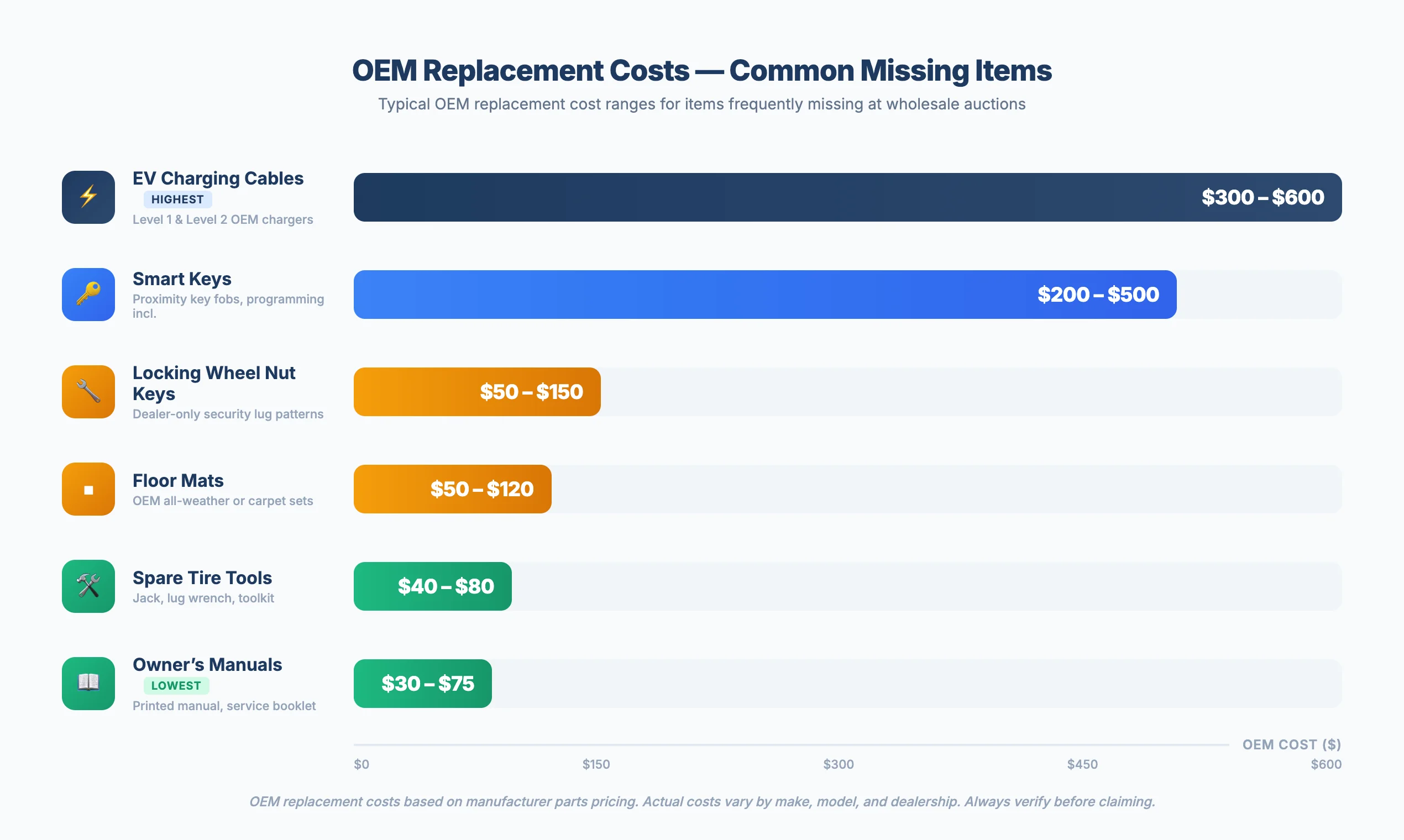 OEM replacement costs for the most commonly missing items at wholesale auctions
What Platforms Typically Cover vs. Don’t
Coverage for missing items varies significantly by platform and by the type of item. Items explicitly mentioned in the condition report but absent at delivery receive the strongest coverage. Accessories that NAAA policy classifies as optional or that the platform excludes by policy are difficult to claim regardless of value.
Manheim applies a $400 individual / $800 cumulative threshold for timed sales and excludes manufacturer-optional accessories under its PSI policy. ACV Auctions explicitly lists “Keys Missing or Not Working” as a valid arbitration reason, including on Red Light vehicles. OPENLANE in Europe applies a EUR 200 minimum claim amount and caps “Other” category claims at EUR 100.
| Coverage Level | Item Examples | Platform Notes |
|---|---|---|
| Usually covered | Keys listed in CR, smart keys, key fobs | ACV covers missing/non-working keys including Red Light; BCA warrants all keys/codes/fobs from seller; Manheim covers if above $400 threshold |
| Sometimes covered | Owner's manual, locking wheel nut key, EV charging cable | Covered when listed in CR; OPENLANE caps 'Other' claims at EUR 100; Manheim PSI excludes optional accessories |
| Rarely covered | Floor mats, cargo nets, parcel shelves, spare tire kits | NAAA excludes accessories on vehicles over 4 model years; ADESA Clear excludes vehicle accessories entirely |
| Not covered (as-is) | Any items from salvage or as-is sales | Copart and IAAI sell strictly as-is; no missing-item claims accepted |
Filing Deadlines and Timeline Expectations
Missing-item claims follow the same filing windows as standard arbitration claims at most platforms. The clock starts at the point of sale or delivery, depending on the platform. Filing early — within 24 hours of delivery — strengthens your claim by reducing questions about whether items were lost in transit or after receipt.
| Platform | Filing Deadline | Expected Response Time |
|---|---|---|
| Manheim | 10 calendar days from sale date | 5 business days per milestone |
| ADESA | 10 calendar days from sale date | 5–7 business days |
| ACV Auctions | 2 calendar days from delivery | 2–3 business days |
| BCA | 48 hours from collection or 500 miles | 5–10 business days |
| OPENLANE Europe | Per claim policy schedule (varies by item) | 5–10 business days |
| Copart / IAAI | Not applicable — sold as-is | No claims accepted |
Document the delivery date and mileage at receipt. If you use a transport company, photograph the vehicle and its contents at the point of handover. Transport damage or loss is a carrier issue, not a platform claim.
Frequently Asked Questions
Can I claim for a missing key if the condition report did not mention keys?
Yes, but the claim carries less weight. If the condition report did not list keys at all, you are claiming based on reasonable expectation rather than documented discrepancy. Under NAAA policy, vehicles under four model years old are expected to include all original keys. For older vehicles, the absence of key documentation in the condition report weakens the claim. ACV is an exception — it accepts “Keys Missing or Not Working” as a standalone arbitration reason regardless of condition report content.
What if the missing item costs less than the platform minimum?
Some platforms enforce minimum claim thresholds. OPENLANE requires a EUR 200 minimum, and Manheim applies a $400 individual item threshold for timed sales. If the missing item falls below the minimum, you have two options: bundle it with other missing items to exceed the threshold, or contact the platform’s operations team directly. Operations-level claims sometimes bypass formal arbitration thresholds.
Should I file a missing items claim as arbitration or operations complaint?
File through the operations or customer service channel first for missing items. Formal arbitration is designed for undisclosed defects, condition grade discrepancies, and title issues. Missing keys and accessories are often handled faster through the platform’s operations team, which can contact the seller directly without triggering the full arbitration process. If the operations team cannot resolve the claim, escalate to formal arbitration with your original documentation.
What if the seller says items were present when consigned?
This is common and is exactly why delivery documentation matters. Photograph the vehicle’s contents at delivery, including the glovebox, boot, and any storage compartments. If you used a transport carrier, the carrier’s bill of lading should note items received. Without delivery-point evidence, the claim becomes your word against the seller’s — and most platforms will side with the party that has documentation. For a full evidence preparation workflow, see the Arbitration Evidence Pack Checklist.
Next Steps
Use this template within the platform’s filing deadline — ideally within 24 hours of delivery. Attach replacement cost quotes from an OEM dealer or authorized parts supplier, and photograph every compartment where the missing item should have been stored. A complete evidence package paired with a structured claim email resolves faster than a vague complaint.
Related resources for auction claims and documentation:
- Arbitration Claims in Vehicle Auctions — full policy framework covering NAAA standards, platform-specific rules, and resolution outcomes
- Condition Report Verification Checklist — 35-item checklist to catch discrepancies before you bid
- Arbitration Evidence Pack Checklist — 29-item checklist for assembling complete evidence before filing
- Arbitration Claim Email Template — template for undisclosed mechanical defects, frame damage, odometer, and title claims